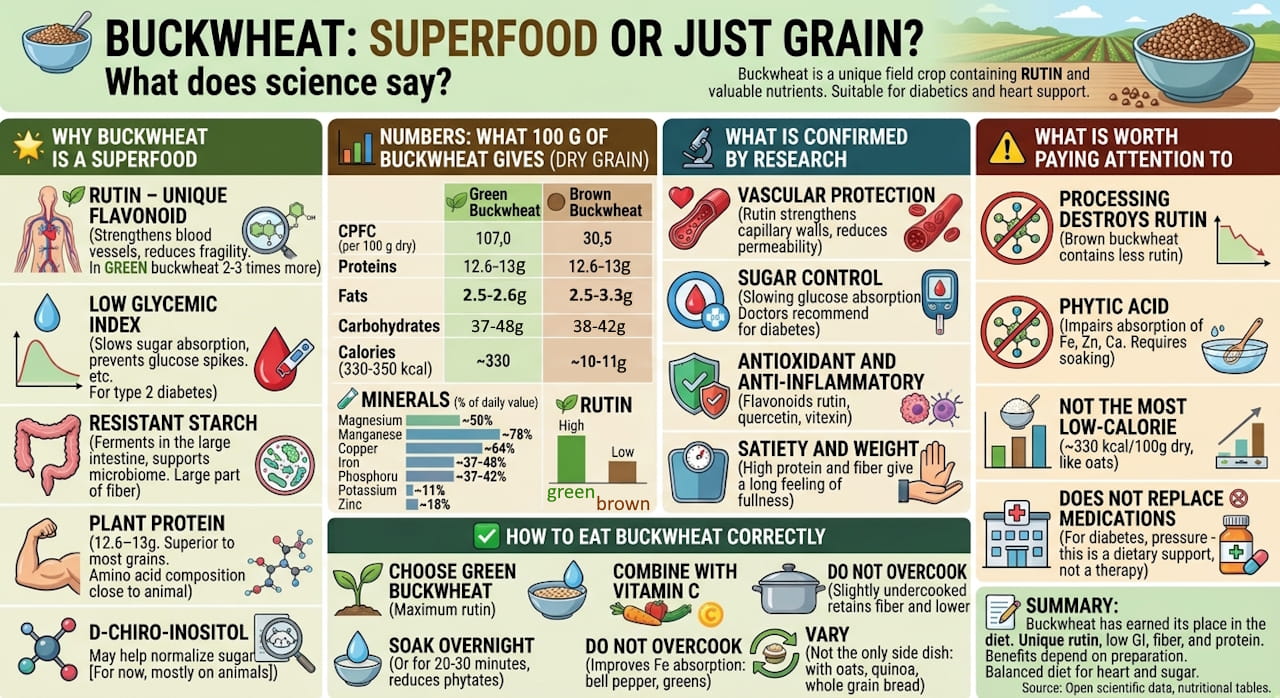
🥣 Buckwheat as a superfood: what does science say?
Buckwheat is the only field crop containing rutin, a flavonoid with proven benefits for blood vessels. Its low glycemic index, resistant starch and plant protein make it especially valuable for people with diabetes and those who look after their heart. The way it is prepared determines how much benefit you actually get.
🌟 Why buckwheat is called a superfood
🌿 Rutin — a unique flavonoid. Buckwheat is the only field crop that contains rutin (vitamin P). This compound strengthens capillaries, reduces their fragility and permeability, and also has an antioxidant effect. Green (unprocessed) buckwheat contains 2–3 times more rutin than brown (roasted) buckwheat.
💧 Low glycemic index. Buckwheat raises blood glucose slowly, which helps avoid sharp spikes in sugar and the subsequent "crash". This makes it one of the preferred grains for people with type 2 diabetes.
🦠 Resistant starch. Most of the fiber in buckwheat is resistant starch, which is not digested in the small intestine but fermented by the microflora of the large intestine. This supports microbiome health and metabolism.
💪 Plant protein. In protein content, buckwheat surpasses most grains (excluding legumes), and in amino acid composition its protein is close to animal protein.
🔬 D-chiro-inositol and fagopyritol. Natural compounds that, according to some studies, may help normalize blood sugar levels. However, most of these effects have been shown in animals, not in humans.
📊 Numbers: what 100 g of buckwheat (dry groats) provides
Data from the Roskachestvo database and dietetic reference books. The figures may vary depending on the variety and degree of processing. All values are for dry groats; when cooked, 100 g yields approximately 300 g of ready porridge, and the concentration of nutrients per serving decreases accordingly.
🔥 Macronutrients (per 100 g)
- Protein — 12.6–13 g (higher than in rice and wheat)
- Fat — 2.5–3.3 g (predominantly unsaturated)
- Carbohydrates — 62–68 g (mainly starch)
- Dietary fiber — ~10–11 g (a significant part is resistant starch)
- Calories — 329–350 kcal (comparable to rice and millet)
🧪 Minerals (per 100 g, % of daily value)
- Magnesium — 200 mg (~50%)
- Phosphorus — ~296–298 mg (~37–42%)
- Iron — 6.7 mg (~37–48%)
- Manganese — 1.56 mg (~78%)
- Copper — 640 µg (~64%)
- Zinc — ~2 mg (~18%)
- Potassium — 380 mg (~11%)
- Calcium — ~20 mg (~2%)
Daily values vary depending on sex, age and physiological state.
🌿 Rutin and flavonoids
- Rutin — 0.48–4.97 mg/100 g (in products made from the fruit): green buckwheat contains 2–3 times more than brown
- Quercetin, quercitrin, hyperoside — present (other flavonoids of buckwheat)
🔬 What has been confirmed by research
❤️ Vascular protection. Rutin strengthens capillary walls and reduces their permeability and fragility. A lack of flavonoids can lead to edema and bleeding caused by capillary fragility. Rutin also protects vitamin C from oxidation, increasing its effectiveness 15–20-fold.
🩸 Blood sugar control. The low glycemic index and resistant starch slow down glucose absorption. Endocrinologists name buckwheat among the preferred grains for people with diabetes. The compounds D-chiro-inositol and fagopyritol reduced blood sugar in animal experiments, but clinical confirmation in humans is still insufficient.
🛡️ Antioxidant and anti-inflammatory action. Buckwheat flavonoids (rutin, quercetin, vitexin) exhibit antioxidant, anti-inflammatory and capillary-protective properties. Vitexin also has a vasodilating effect and enhances metabolism in the heart muscle.
⚖️ Satiety and weight. The high content of protein and fiber provides a long-lasting feeling of fullness. This indirectly helps control total calorie intake.
⚠️ What to watch out for
⚠️ Processing destroys rutin. Roasting (brown buckwheat) reduces the rutin content compared with green buckwheat. Frying and prolonged heat treatment also destroy flavonoids. If your goal is maximum vascular benefit, choose green buckwheat.
🧪 Phytic acid. Like all grains, buckwheat contains phytates, which impair the absorption of iron, zinc and calcium. Soaking overnight or at least for 20–30 minutes before cooking greatly reduces their content.
🍚 Not the "lowest-calorie" grain. The calorie content of buckwheat is close to that of oats and rice — about 330 kcal per 100 g of dry groats.
🚫 Does not replace medications. For diabetes, hypertension or vascular problems, buckwheat is a support for the diet, not a therapy. D-chiro-inositol and other compounds have been studied mainly in animals.
✅ How to eat buckwheat correctly
🌿 Choose green buckwheat if you want maximum rutin. Brown (roasted) is tastier and more familiar, but contains less rutin.
💧 Soak overnight or at least for 20–30 minutes — this reduces phytates and improves mineral absorption.
🥚 Combine with vitamin C (bell pepper, herbs, lemon) — this improves the absorption of non-heme iron from buckwheat.
🍲 Do not overcook. Slightly undercooked buckwheat retains more fiber and has a lower glycemic index than overcooked buckwheat.
🔄 Vary — buckwheat does not have to be the only side dish. Alternate it with oats, quinoa and whole-grain bread.
📝 Summary
Buckwheat has earned its place in the diet not through fashion but through its composition: unique rutin, low glycemic index, resistant starch and complete plant protein. But its benefits depend on how you cook it and what you eat it with. Green buckwheat with soaking and a source of vitamin C is the maximum. Roasted groats boiled until mushy and eaten without vegetables are just a side dish.
Buckwheat is an excellent base for a balanced diet, especially if you watch your blood sugar and blood vessels.
Other gluten-free super grains: 🌾 Top 3 grains for gluten-free health