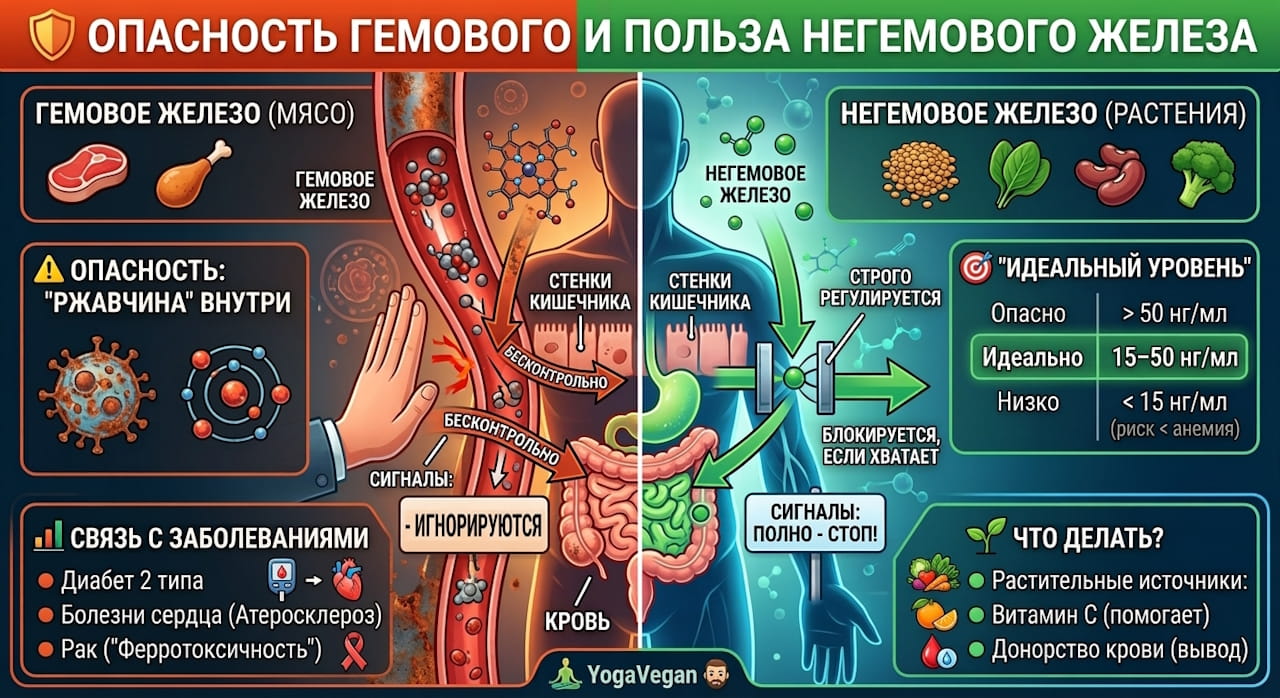
🛡️ The danger of heme iron and the benefit of non-heme iron
Heme iron (from meat) is absorbed by the body almost uncontrollably, whereas non-heme iron (from plants) is strictly regulated depending on the body's needs.
🔬 Mechanism: why heme iron "slips through"
Our body is evolutionarily adapted to regulate iron stores only at the stage of absorption in the intestine. We have no active mechanism to excrete excess iron (other than blood loss).
- Non-heme iron (plant-based): Absorption is blocked if iron stores in the body are already full. The intestine "knows" when to stop absorbing iron from beans or spinach.
- Heme iron (from meat): It is absorbed through a different pathway. This mechanism does not obey signals that stores are already overflowing. Heme iron literally "leaks" through the intestinal walls into the blood, whether we want it to or not.
⚠️ What the danger is: "Rust" inside us
Iron itself is a "double-edged sword". It is essential for oxygen transport, but in its free form it is a pro-oxidant. This means it promotes the formation of free radicals that damage cells, proteins, and DNA — essentially causing "rust" inside the body.
Since excess heme iron is not excreted, it accumulates with age (especially in men and women after menopause, when natural blood loss ceases).
📊 Link to diseases (data cited by Greger)
Dr. Greger and other researchers link high heme iron levels to a number of serious diseases:
- Type 2 diabetes: Each additional milligram of heme iron per day increases the risk of diabetes by approximately 16%. Genetic data confirm that high iron levels are themselves a cause, not merely a consequence of eating meat.
- Heart disease: Heme iron oxidizes cholesterol, contributing to the development of atherosclerosis. The risk of coronary heart disease increases by 27% for each milligram of heme iron per day.
- Cancer: Iron is called a "ferrotoxic" factor. Studies show that reducing iron stores (for example, through blood donation) significantly reduces the risk of death from cancer, which confirms the theory that even "normal" iron stores can be dangerous.
🎯 What is the "ideal level"?
Greger argues that the standard "normal" range for ferritin (the protein that stores iron) of 30–300 ng/mL is an outdated concept based on statistics rather than health.
He suggests aiming for a "sweet spot":
- Too low: < 15 ng/mL (risk of anemia)
- Ideal (Sweet Spot): 15–50 ng/mL
- Dangerous: > 50 ng/mL — from this level, the risks of chronic diseases begin to rise
🌱 What to do?
Since we cannot excrete excess iron, the best strategy is to control its intake and better obtain non-heme iron from plant foods, as well as remove its excess.
- Plant sources: Legumes, spinach, tofu, seeds, dried fruits. The body will take from them exactly as much as it needs.
- Vitamin C: Helps absorb non-heme iron better without overloading the body.
- Blood donation: For people with high ferritin (>50), this is the only way to safely "shed" excess iron and reduce risks.
Our body is adapted to plant-based nutrition, and that says it all: 🍎 On natural species-appropriate nutrition intended for humans
Source: 📚 "How Not to Die: Food in the Fight for Life" - Michael Greger