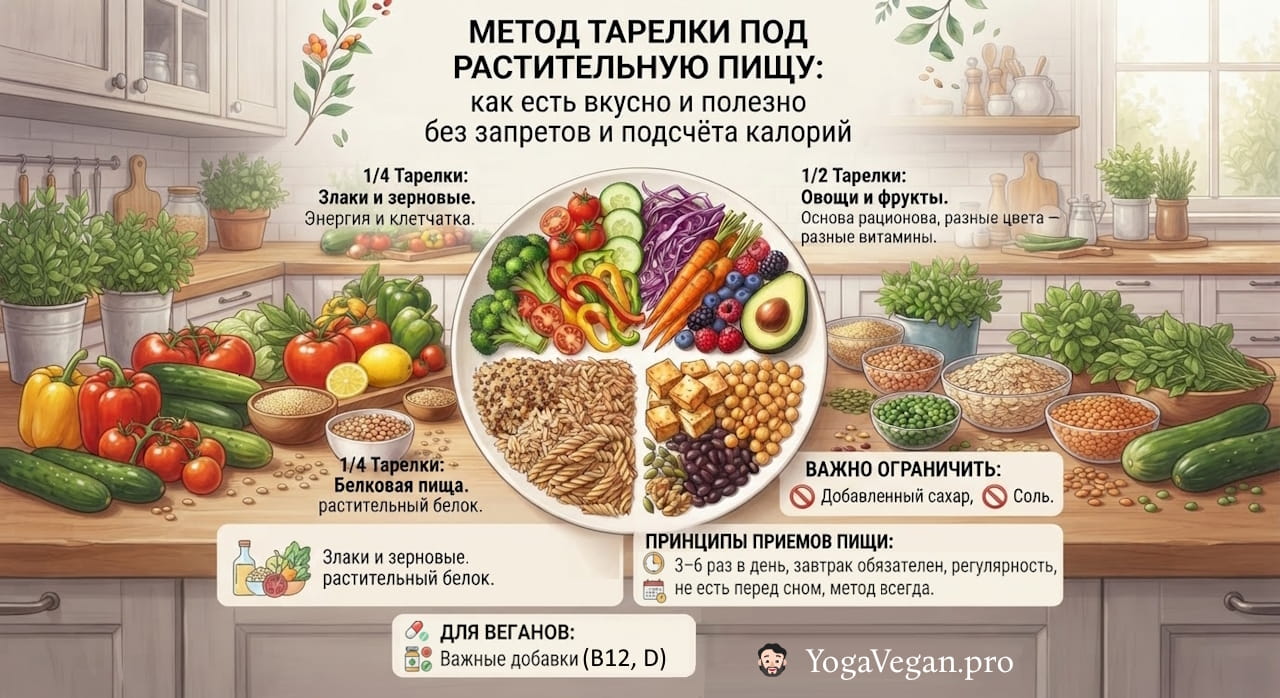
🥗 The plate method for plant-based food: how to eat tasty and healthy without prohibitions and calorie counting
The plate method is not a diet and not prohibitions. It is a simple constructor that helps assemble the diet correctly to obtain the necessary macro- and micronutrients without unnecessary headache and calorie counting.
🍽 Main rule: a plate of 22–25 cm
Size matters! For women, a plate of 22–23 cm is enough, for men — 25 cm. On such a diameter it is easier to control portions. The total amount of food should not exceed the size of a clenched fist. It is exactly this individual volume that is recommended to consume per 1 meal. You can have less, but not more.
📊 Divide the plate into 4 parts
🥦 1/2 of the plate — Vegetables and fruits
The basis of the diet. Choose seasonal, fresh or frozen (without sugar and excess salt). Advice: "Eat the rainbow" — different colors = different vitamins.
What to put on the plate (rainbow method):
- Green: spinach, broccoli, zucchini, cucumbers, green beans, arugula, parsley, dill
- Red: tomatoes, bell pepper, radish, red cabbage, beetroot
- Orange/yellow: carrots, pumpkin, sweet potato, corn, yellow pepper
- Blue/purple: eggplant, red cabbage, blueberries, blackberries, grapes
- White/beige: cauliflower, onion, garlic, mushrooms, daikon
Fruits: apples, pears, bananas, citrus fruits, berries, kiwi, mango, avocado (yes, avocado is a fruit, but due to its high caloric content, count it as a source of fats).
Advice: frozen vegetables and fruits retain almost all vitamins if frozen immediately after harvest. This is convenient and often cheaper than fresh.
🎨 Colors are not for nothing
A plant-based diet is rich in vegetables and fruits, but monotony is dangerous for health. The more colors, the more different phytonutrients that support immunity, reduce inflammation, and help absorb iron, calcium, and other macro- and micronutrients from plants. This is well described in the article: 🌈 The rainbow eating method: why color matters
🌾 1/4 of the plate — Grains and cereals
Cereals, whole-grain pasta (but better to exclude). Whole-grain products provide energy and fiber for a long time.
What to put on the plate:
- Whole grains: buckwheat, quinoa, brown rice, oatmeal (long-cooking), spelt, einkorn, barley, whole-grain pasta
- Legume grains: lentils, chickpeas, beans, peas (they are both protein and complex carbohydrates)
- Bread: whole-grain, rye, with bran (without added sugar)
- What is better to exclude: white rice, white bread, regular pasta from soft wheat varieties, semolina — they quickly raise blood sugar and provide little benefit.
Advice: half of the grain part of the plate should be whole-grain. Cereals can be cooked in advance and stored in the refrigerator for 3–4 days — this saves time.
🫘 1/4 of the plate — Protein food
Legumes, nuts. Protein should be diverse. Minimum — 0.8 g per kg of weight. Vegans are recommended 1–1.2 g/kg, since plant protein is absorbed somewhat worse.
What to put on the plate:
- Legumes: lentils (green, red, black), chickpeas, beans (black, red, white), peas, mung bean, soy (edamame)
- Soy products: tofu, tempeh, soy meat, soy milk
- Nuts: almonds, walnuts, cashews, pistachios, pine nuts, Brazil nut (1–2 pieces per day — a source of selenium)
- Seeds: pumpkin, sunflower, sesame, flaxseed, chia, hemp seed
- Mushrooms: champignons, oyster mushrooms, shiitake (less protein, but a good source of vitamins and umami taste)
- Grains with protein: quinoa, buckwheat, oats (contain all essential amino acids)
Advice: combine different sources throughout the day. For example: in the morning — oatmeal with nuts, in the afternoon — lentil soup, in the evening — tofu with buckwheat. This way you will get a complete amino acid profile.
Important: if you exclude soy, be sure to add more legumes and seeds to cover the protein norm.
📉 What is important to limit
- Added sugar — no more than 5–10% of the diet, and better to exclude altogether
- Saturated fats — less than 10%, and better to exclude altogether
- Trans fats — strive for zero
- Salt — no more than 1 tsp per day, and better to exclude added salt altogether, since it is already present in fruits, vegetables, and other products
🕒 Principles of meals
- 3–6 times a day
- Breakfast — an excellent habit!
- Regularly, at the same time
- Do not eat 3–4 hours before sleep
- The plate method at every meal
⚡️ The basics you need to know
- Macronutrients (proteins, fats, carbohydrates, water) — provide energy
- Micronutrients (vitamins, minerals) — do not provide energy but are critically important
🌱 Important additions for vegans
- Vitamin B12 — critically important. It is not found in plant food. Be sure to take supplements or fortified products (plant milk, nutritional yeast).
- Vitamin D — as studies have shown, many people lack it now, even in hot countries. Go out into bright sun more often, since vitamin D, like a tan, is obtained only with high intensity of ultraviolet light. Moreover, it does not penetrate through glass.
- Iron — plant iron (spinach, legumes, buckwheat) is absorbed worse. Combine with vitamin C (bell pepper, citrus fruits, sauerkraut). Remember, heme (animal) iron is dangerous for health.
- Calcium — sesame, almonds, green leafy vegetables, fortified plant drinks.
- Zinc — pumpkin seeds, legumes, nuts.