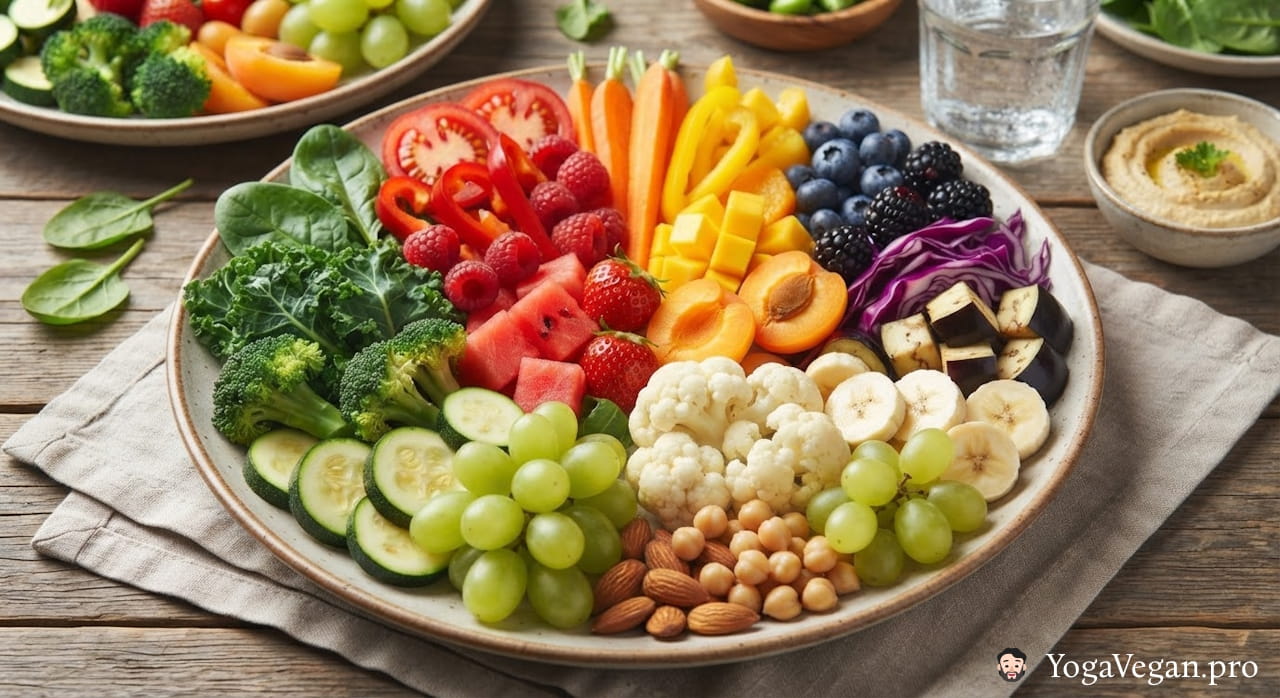
🌈 The rainbow eating method: color matters
Nature did not accidentally color vegetables and fruits in different colors. Each shade is a signal about what useful substances are inside. Colored pigments (phytonutrients) not only give brightness but also perform protective functions in plants — and once in our body, they work for our health.
⚙️ How it works
Color = pigment = group of useful substances. The more diverse the palette on the plate, the wider the spectrum of vitamins, minerals, and antioxidants you get. This is the Rainbow method: do not count calories but count colors.
We continue to analyze the 🥗 plate method for plant-based nutrition. We already know that half the plate is occupied by vegetables and fruits. But which ones exactly? The answer is simple: all the colors of the rainbow.
🎨 What is behind each color
- 🟢 Green — chlorophyll, vitamin K, vitamin B, calcium, folic acid
- 🔴 Red — lycopene (a powerful antioxidant), vitamin C
- 🟡 Yellow and orange — beta-carotene (a precursor of vitamin A), vitamin C
- 🟣 Purple — anthocyanins (antioxidants), vitamin C
- ⚪ White and beige — allicin, potassium, fiber
Important: color shows not only micronutrients (vitamins, minerals) but also macronutrients — for example, fiber and carbohydrates. And also the type of antioxidants that protect cells from aging and inflammation.
How it works in practice: No need to memorize tables. Just ask yourself: "How many colors are on my plate?" If one or two — add more. If three or four — you are already getting a wide spectrum of benefits.
🍽 Why does this work?
Vegetables and fruits are natural supplements. On average we need about 30 g of microelements for every 70 kg of food. Each kilogram should contain 0.0004 g of minerals and vitamins. And nature has already packed everything necessary into bright colors.
What vegetables and fruits give:
- Vitamins A, B, C
- Potassium and magnesium
- Phytonutrients and antioxidants
- Fiber
- Support water balance
🛡 Debunking myths
Myth 1: "Modern vegetables and fruits are empty or dangerous."
Reality: With a balanced diet we get all the necessary vitamins and minerals from vegetables and fruits. Half a bell pepper = the daily norm of vitamin C.
Myth 2: "Fruits cannot be eaten because of sugar."
Reality: Sugar in fruits ≠ added sugar. These are different things. We do not limit fruits but monitor the quantity. Most people need more fruits than they eat.
⚠️ Important: do not prescribe supplements to yourself on your own. Balanced nutrition is the key to health. Vitamins from food are absorbed better and more safely.
📊 How many vegetables and fruits are needed?
Vegetables (measuring cups):
- Women 19–30 years: 2.5–3 cups
- Women 31–59 years: 2–3 cups
- Women 60+: 2–3 cups
- Men 19–59 years: 3–4 cups
- Men 60+: 2.5–3.5 cups
Fruits (measuring cups):
- Women 19–60+: 1.5–2 cups
- Men 19–59 years: 2–2.5 cups
- Men 60+: 2 cups
Children:
- 2–4 years: 1–1.5 cups of fruits
- 5–8 years: 1–2 cups
- 9–13 years: 1.5–2 cups
- 14–18 years: girls 1.5–2, boys 2–2.5 cups
1 measuring cup = 240 ml (a regular faceted glass to the brim is about 200–250 ml, so it is almost the same).
How to determine a portion without a cup?
- Palm (handful) = portion of vegetables or fruits
- Fist = portion of grains
- Palm without fingers = portion of protein
🌈 Breaking down the rainbow by colors
🟢 Green
- Vegetables: cabbage, broccoli, zucchini, squash, spinach, beans, soy, green pepper, artichoke, celery
- Fruits: kiwi, grapes, pears, apples
- Benefits: chlorophyll, vitamin B, vitamin K, calcium
🔴 Red
- Vegetables: tomatoes, red pepper, red leaf lettuce, beans, radish, beetroot
- Fruits: watermelon, strawberries, raspberries, grapefruit, guava
- Benefits: lycopene — a powerful antioxidant
Tip: lycopene is better absorbed after heat treatment (stewed tomatoes, tomato soup)
🟡 Yellow and orange
- Vegetables: carrots, pumpkin, yellow or orange pepper, sweet potato
- Fruits: apricots, peaches, mandarins, lemons, melon
- Benefits: beta-carotene — a precursor of vitamin A, antioxidant
🟣 Purple
- Vegetables: eggplant, red cabbage, beans
- Fruits and berries: plum, fig, blueberry, blackberry
- Benefits: anthocyanin — antioxidant
⚪️ White/beige (addition for completeness of the rainbow)
- Vegetables: cauliflower, onion, garlic, mushrooms, daikon
- Fruits: bananas, white grapes
- Benefits: allicin (garlic), potassium, fiber
🌱 Important for vegans
Plant-based nutrition is automatically rich in vegetables and fruits. But for the Rainbow method to work fully:
- Iron from green vegetables (spinach, broccoli) is absorbed better with vitamin C — add bell pepper or lemon juice
- Calcium from greens (cabbage, broccoli) — an excellent source for those who exclude dairy products
- Antioxidants from different colors help reduce inflammation and support immunity