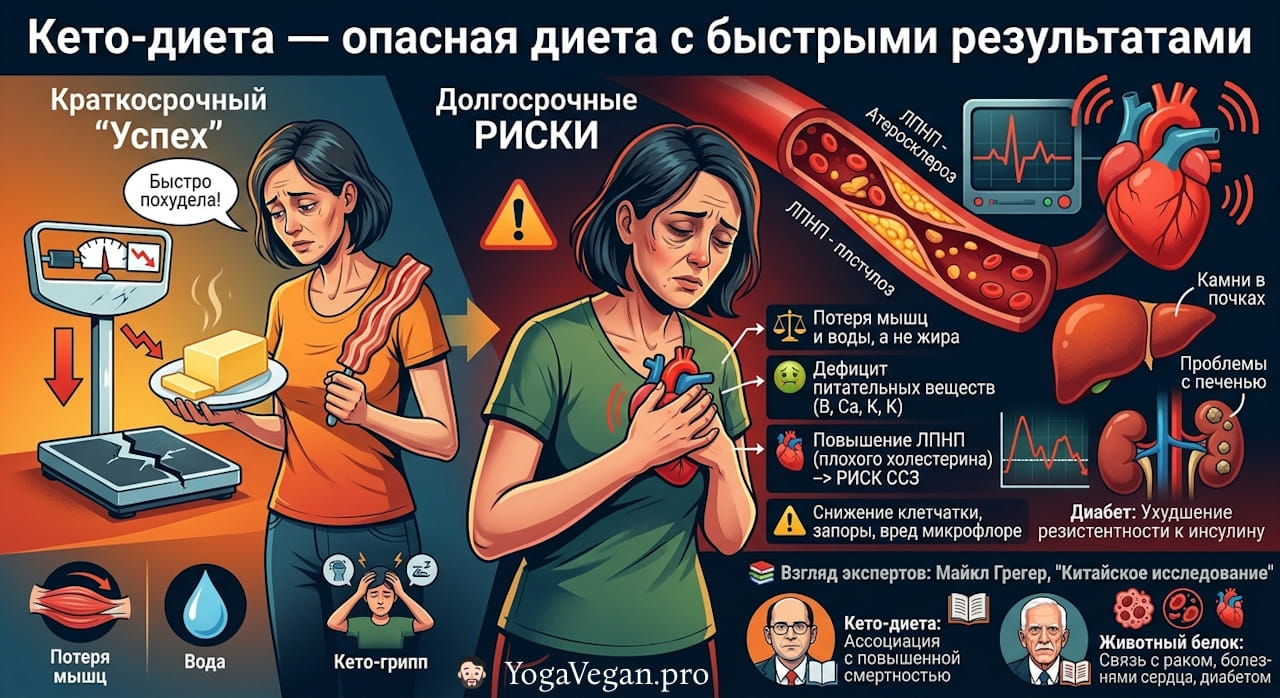
🧈 Keto diet — dangerous but with quick results
The keto diet is a eating regimen with very high fat content and extremely low carbohydrate content that forces the body to use fat as its main source of energy. Despite its popularity for rapid weight loss, data point to serious health risks.
⚖️ Short-term effects and risks
The keto diet may be effective for short-term weight loss, but it is important to understand at what cost this happens:
- Weight loss due to muscle and water: Studies show that on a keto diet, weight loss occurs mainly due to water and muscle mass, not fat. In one experiment on a low-carb diet, there was no significant fat loss, while on a low-fat diet, fat loss was about 1 kg.
- "Keto flu" and nutrient deficiency: Short-term side effects such as stomach upset, headache, fatigue, and dizziness. Due to strict dietary restrictions, the keto diet can lead to deficiency of B vitamins, calcium, potassium, and vitamin K. Michael Greger notes that to obtain all necessary micronutrients on a keto diet, one would need to eat more than 37,000 calories per day.
- Digestive problems: Reducing fiber intake (vegetables, fruits, whole grains) often leads to constipation. In addition, the keto diet reduces the diversity and richness of intestinal microflora, which can negatively affect intestinal health.
🫀 Long-term health risks
The most serious concerns are related to the long-term effect of the keto diet on the cardiovascular system and metabolism.
- Increase in "bad" cholesterol (LDL): Saturated fats (the basis of the keto diet) raise LDL levels. Studies by Michael Greger confirm that on a keto diet, the beneficial effect of weight loss on cholesterol is neutralized, and LDL levels may rise. Elevated LDL is the main risk factor for atherosclerosis and cardiovascular diseases.
- Risk of cardiovascular diseases: A diet high in saturated fats is associated with the risk of heart disease. Michael Greger's data show that people on low-carb diets (especially animal-based) have a higher risk of coronary artery calcification — a marker of heart disease progression.
- Worsening of diabetes course: Although the keto diet can lower blood sugar levels (a symptom), it does not treat the disease itself — insulin resistance. Moreover, there is data that the keto diet can worsen carbohydrate tolerance and increase insulin resistance. Studies have not shown that low-carb diets cause sustained remission of type 2 diabetes; on the contrary, after a year the results were worse than in control groups.
- Other long-term risks: kidney stones, liver disease, and increased risk of bone fractures. Michael Greger also mentions cases of death of children from selenium deficiency on a keto diet.
📚 The view of Michael Greger and "The China Study"
Michael Greger and Colin Campbell (author of 📚 "The China Study") hold similar views, criticizing the keto diet and advocating whole plant foods.
Criticism of the keto diet: Dr. Greger points out that the keto diet, originally developed for treating epilepsy in children, is unjustifiably popularized for everyone. He emphasizes that low-carb diets are associated with an increased risk of all-cause mortality, especially when animal fats and proteins predominate.
"The China Study": Colin Campbell, based on a large-scale study in China, concluded that consumption of animal protein is directly linked to the development of chronic diseases, including cancer, heart disease, and diabetes. He found that even relatively small amounts of animal food increase the risk of these diseases, and that a diet based on whole plant products is the healthiest.
📝 Conclusion
The keto diet is an effective tool for short-term weight loss that can have serious consequences for physical and mental health, especially with long-term adherence. Strict restrictions carry the risk of nutrient deficiency, loss of muscle mass, digestive problems, and, most importantly, increased levels of "bad" cholesterol and risk of cardiovascular diseases.
Source: 📚 "How Not to Die: Food in the Fight for Life" - Michael Greger and 📚 "The China Study" - Colin Campbell